Dwie wieże
Aleka Polis, Ewa Kruszewska, Dwie wieże, 2013
Alternativa 13, Instytut Sztuki Wyspa, Gdańsk
Współpraca, tekst: Ewa Majewska
Podziękowania dla Fundacji Wyspa i Jacka Friedricha.
Co to właściwie znaczy „patrzeć”? Jeśli nazywamy tak oglądanie animacji, które podejmują próbę rekonstrukcji niezrealizowanych projektów architektonicznych przekształceń Gdańska powstałych na przełomie lat 40′ i 50′ XX wieku w duchu realnego i narodowego socjalizmu, mamy najprawdopodobniej na myśli operację polegającą przede wszystkim na budowaniu i umacnianiu wyrazistej relacji dzielącej historię na „My” i „Oni”. My, przedstawiciele nowego, wolnego świata oraz oni – totalitarni włodarze oraz podporządkowani im architekci i urbaniści. W tym patrzeniu najważniejsza jest polityczna dominacja liberalizmu, budowana w opozycji do władzy totalitarnej, liberalizmu, który wspiera wolność i różnorodność, w którym nie przeprowadza się czystek etnicznych i pozwala na autonomię tkanki miasta.
Zainicjowane przez Alekę Polisiewicz i kontynuowane we współpracy z Ewą Kruszewską prace nad narodowosocjalistycznymi i socrealistycznymi planami przebudowy miast rozpoczęło się od innej praktyki patrzenia – od zagubienia się w mieście i przyglądania się konkretnym budowlom i ich kształtom, od poczucia bezsilności i przytłoczenia masywnymi bryłami, ściśle geometrycznymi kształtami, prostymi skrzyżowaniami, brakiem zieleni. To patrzenie było czynnością bardziej sensualną, potęgowaną przez upał, który – niczym w Obcym Camusa, pozwalał doświadczyć miasta jako pustyni. Obserwacje te zostały rozwinięte do śledzenia losów miejskich utopii i dystopii oraz konkretnych badań nad planami przekształcenia Warszawy dokonywanymi niemal równolegle przez architektów związanych z reżimem faszystowskim oraz tych, których przyniósł ustrój sowiecki.
Wieże, które pojawiają się w tej odsłonie pracy, to wirtualna rekonstrukcja projektu przebudowy Wyspy Spichrzów w Gdańsku z siedzibą Gauleitera (1941) oraz pracy nr 2 w konkursie na projekt urbanistyczno-architektoniczny dla śródmieścia Gdańska z okresu dominacji nurtu socrealistycznego (1953). Aleka Polis i Ewa Kruszewska żonglują tymi budowlami, skutecznie nawiązując do dwóch wież z drugiego tomu trylogii „Władca Pierścienia” J.R.R. Tolkiena. Jedna z nich, Minas Morgul, stała się twierdzą nazguli, rycerzy cienia, których jedynym celem było zdobycie pierścienia władzy, zaś druga – Isengard, została przekształcona w twierdzę czarodzieja hodującego żołnierzy walczących po stronie ciemności. Obie wieże zbudowali ludzie, obie ostatecznie stały się siedzibami zła. Właśnie między nimi odbywa się wędrówka stanowiąca dla jej uczestników przestrzeń walki nie tylko z zewnętrznymi wrogami, ale też z własnym pragnieniem władzy, potęgi i uznania. W przypadku gdańskich wież – ich dominanty wysokościowe, agresywnie górujące nad wieżami kościoła i ratusza, zamykają najważniejszą architektonicznie i społecznie oś historycznej części Gdańska, zawłaszczając ideologicznie przestań miasta.
Patrząc na niedoszłe gdańskie wieże, możemy „patrzeć” albo „patrzeć”. Dystansować się względem polityki miejskiej ściśle podporządkowanej faszyzmowi czy socrealizmowi, bądź też analizować założenia architektoniczne i urbanistyczne, konfrontować je z współczesnością oraz – korzystając z metafory zaproponowanej przez twórczynie projektu – badać współczesne wcielenia władzy. Wieże to od zawsze symbol potęgi. Budowane głównie po to, by kontrolować przestrzeń, ale także w celu dobitnego pokazania potęgi, wielokrotnie okazywały się symbolem porażki, jaką w walce z doskonałością od zawsze toczą dalecy od niej ludzie. Jak pokazuje choćby historia wieży Babel, budowle te stają się prędzej czy później osią niezgody i walki, niemniej – jak pokazują teksty Derridy czy Benjamina – mogą też zostać symbolicznie przekształcone w metafory wielości, której jednym elementem jest walka, ale innym – szukanie wspólnoty.


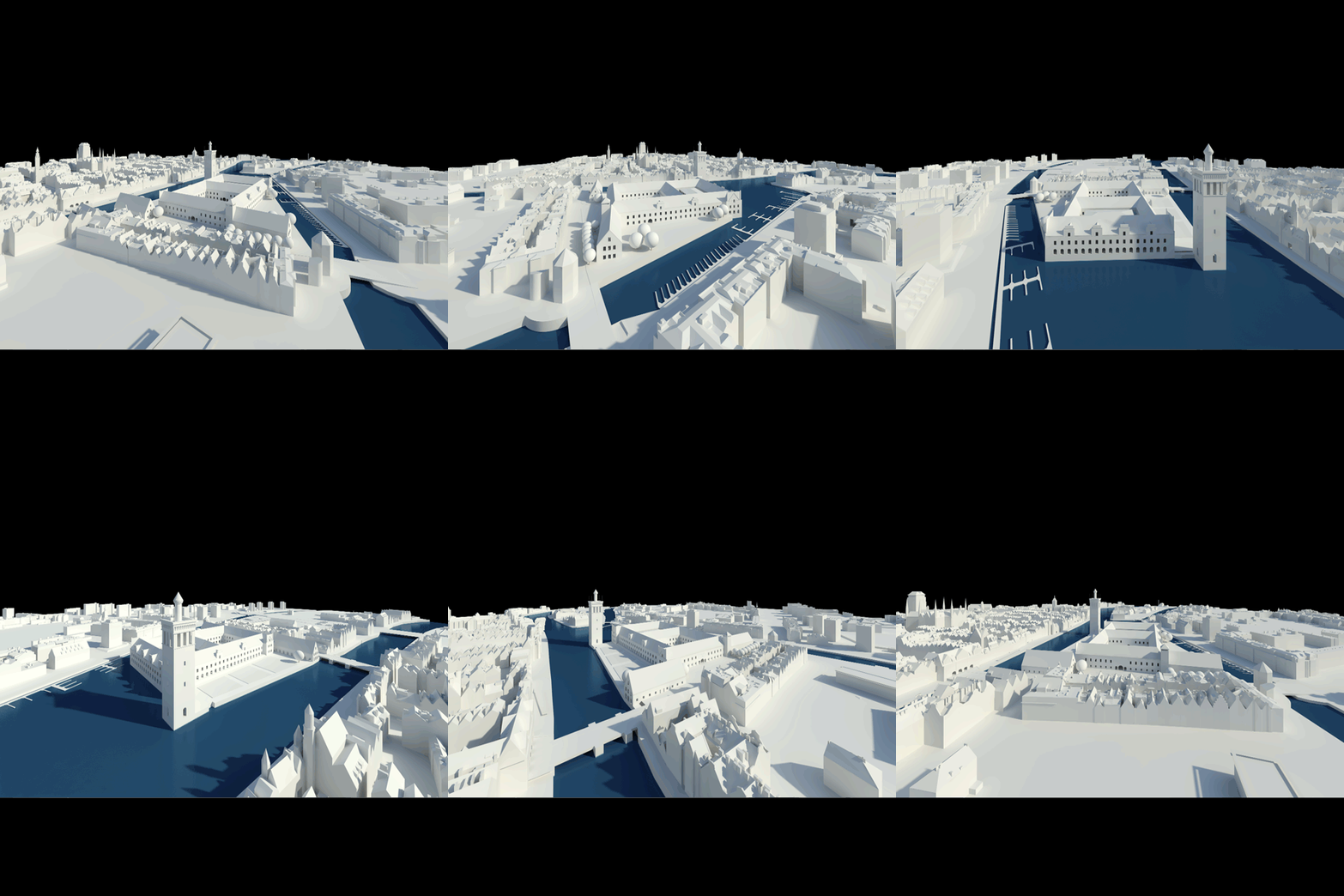


ALEKSANDRA POLISIEWICZ, EWA KRUSZEWSKA, THE TWO TOWERS, 2013
What does looking at actually mean? If we use this word to name the act of watching animation that reconstructs unrealised architectural designs for a transformation of Gdańsk in accordance with the spirit of real and national socialisms at the turn of the 1940s, we most probably think of an operation predominantly concentrated on the building and reinforcement of manifest relationships that distinguish between Our and Their histories. We – the representatives of a new, free world and they – totalitarian rulers and their subordinate architects and urban planners. What is the most important in such an act of looking is the political dominance of liberalism, built in opposition to the totalitarian power; liberalism which supports liberty and diversity, liberalism where one refrains form ethnic cleansing and allows for the autonomy of the urban tissue.
The research on the National-Socialist and the Real-Socialist plans for the refashioning of cities and towns, initiated by Aleka Polis and continued in collaboration with Ewa Kruszewska, began with a different practice of looking – that of someone who is lost in a city and gazes at concrete buildings and shapes, with the sense of helplessness and being overwhelmed by massive solids, strictly geometrical shapes, simple crossings, and the lack of green areas. This looking was more of a sensual activity, compounded by heat which, like in Camus’s L’Étranger, makes one experience a city as a desert. These observations have their follow-up in the scrutiny of urban utopias and dystopias, as well as concrete research on the planned transformation of Warsaw, developed by architects linked to both the Nazi and the Soviet regimes.
The towers which appear in this edition of the work are a virtual reconstruction of the planned refashioning of the Granary Island in Gdańsk, accommodating the Gauleiter’s headquarters (1941) and, in work no. 2, the ideas from an urban-planning and architectural competition for the project of downtown Gdańsk from the period when the Socialist Realism dominated (1953). Aleka Polis and Ewa Kruszewska juggle with these two buildings, making apt allusions to the two towers from volume two of J. R. R. Tolkien’s Lord of the Rings. One of those towers, Minas Morgul, became the stronghold of the Nazguls, the knights of the shadow whose only aim was to gain the ring of power, the other one is like Isengard, converted into the stronghold of the Wise, the Man of Skill, who was training soldiers to fight on the dark side there. Both towers were built by people and both finally became the nests of evil. It is just in the space between these two towers that a journey occurs, becoming the space of fight for its participants not only against external enemies but, also, their own thirst for power, authority and acclaim. In case of Gdańsk, the towers with their aggressive altitudes, domineering the city’s churches and the hall, and closing the most important axes of the historic part of Gdańsk, both architecturally and socially, commit an ideological appropriation of the city space.
Looking at the unrealised Gdańsk towers, we can either gaze or view, adapting either a distant outlook at urban policy, strictly subordinated to Fascism or Communism, or we can analyse their architectural and urban preconditioning and confront them with the contemporary time. Additionally, we can do a research on the contemporary embodiments of power, using the metaphor of the originators of the project. Towers have always been a symbol of power. Built predominantly to control others and to manifest authority conspicuously, towers have many a time proved to be symbols of a fiasco, which befalls these people who have forever struggled for perfection, being themselves very far from perfect. As illustrated by, say, the history of the Tower of Babel, such buildings will sooner or later become more of a pivot of dispute and fight; nevertheless, as shown by Derrida’s and Benjamin’s writings, they can be symbolically converted into the metaphors of greatness, with an element of contention as one of its components and a tendency to search for union as the other.
Collaboration, text: Ewa Majewska
Words of gratitude to Wyspa Progress Foundation and Jacek Friedrich